
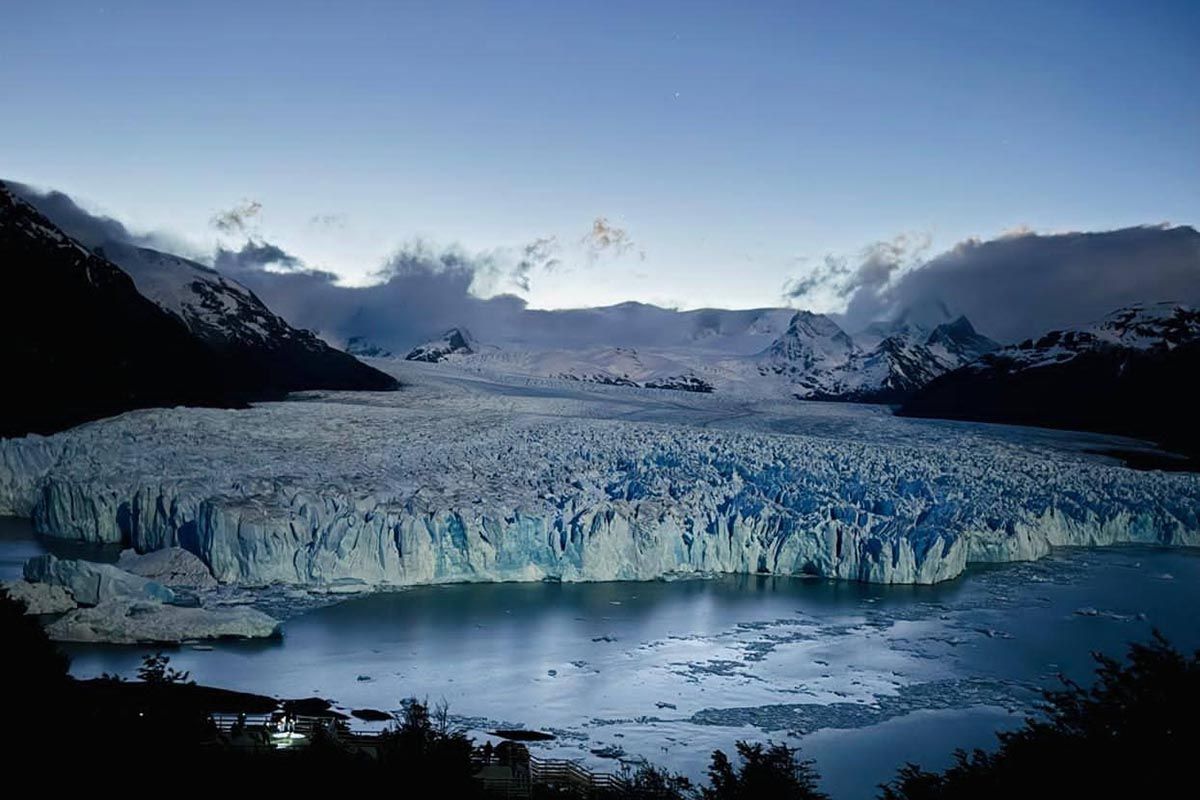
The amendment to the Glacier Law proposed by the national government is illegal and unconstitutional. It reduces protections for glaciers and the periglacial environment to favor the mining sector, undermining the concept of minimum environmental standards (presupuestos mínimos) established in Argentina’s National Constitution to guarantee uniform environmental protection across the entire country. If approved, this reform would set a harmful precedent for other environmental protection laws and put at risk strategic resources essential for the supply of freshwater and the regulation of river basins that provide water to multiple communities and jurisdictions nationwide.
An unconstitutional bill
The bill seeking to amend the Glacier Law is unconstitutional because it violates the constitutional distribution of powers between the National Congress and the provinces under Article 41 of the Constitution.
The Glacier Law has now been in force for 15 years and was pioneering at the time of its adoption. The conditions that led Argentina’s Congress to enact it have only intensified due to the global climate crisis, which is already affecting the national territory. Over the years, the law has been repeatedly upheld by the country’s highest court, which has consistently affirmed that constitutionally mandated environmental protection must be expressed through effective legal instruments, not treated as aspirational statements.
The reforms proposed in this bill are neither clarifying nor interpretive. THEY SEEK TO FUNDAMENTALLY WEAKEN EXISTING PROTECTIONS BY REPLACING A SCIENCE-BASED SYSTEM WITH ONE DRIVEN BY POLITICAL CONVENIENCE. In doing so, the bill would turn a uniform, nationwide protection law into an opt-in framework, granting provinces broad discretion over its application.
This approach would undermine the credibility of the system, deepen the existing lack of social license to operate in many provinces, and usher in a new phase of socio-environmental conflict – ultimately eroding the legal certainty that investors themselves seek.
As presented, the reform also carries a strong presumption of regression in environmental protection. Changes of this magnitude require a specific legislative process grounded in technical and scientific justification, particularly given the risk of weakening or distorting a critical scientific tool such as the National Glacier Inventory. Any proposal to amend this law must therefore be accompanied by a thorough public debate, which cannot take place during extraordinary legislative sessions. There is no urgency or emergency related to glaciers or the activities regulated by this law.
Argentina needs strong institutions, not pendulum-like policy shifts. It needs clear rules that provide predictability, an effective state capable of oversight, and productive sectors that operate within those frameworks. This is the path toward sustainable and modern development. Protecting glaciers and promoting economic activity are not only compatible – they are, ultimately, the only way to build a future.
This attempt to roll back environmental protection must be deemed unconstitutional. Protection of glaciers and the periglacial environment must always move forward, never backward. For these reasons, the National Congress must reject the bill that seeks to modify the minimum environmental standards established by the Glacier Law.
What does the bill propose?
On December 15, President Milei submitted to the National Congress a bill promoting a partial reform of Law No. 26,639 – the Regime of Minimum Environmental Standards for the Preservation of Glaciers and the Periglacial Environment (hereinafter, the Glacier Law) – to be debated during extraordinary legislative sessions.
The current law clearly establishes a common object of protection for the entire country: it protects glaciers and the periglacial environment to preserve them as strategic water resource reserves.
Although the bill retains the law’s original name, it substantially alters both its purpose and the way protection is applied, narrowing its scope. Under the proposed reform, protection would only apply to glaciers and periglacial landforms that serve as strategic water reserves or function as water sources for the recharge of hydrographic basins.
The bill also introduces a fundamental shift by authorizing provinces to determine which glaciers and periglacial landforms meet these criteria. This not only changes the protection approach from one based on scientific criteria to one driven by political opportunity and convenience, but also disrupts the framework established by Article 41 of the National Constitution. That article assigns the federal government the authority to establish minimum environmental standards, while allowing provinces to complement them with stronger protections that may not fall below the national baseline.
In addition, the bill alters the framework set out in Article 6 of Law No. 25,675 (the General Environmental Law), which defines minimum environmental standards as “any rule that provides uniform or common environmental protection throughout the national territory, and whose purpose is to impose the necessary conditions to ensure environmental protection. Its content must provide for the conditions necessary to guarantee the functioning of ecological systems, maintain their carrying capacity, and, in general, ensure environmental preservation and sustainable development.”
By granting provinces the authority to decide what is protected based on political convenience, the bill dismantles the uniform environmental protection guaranteed by Article 41 of the Constitution, effectively undoing the system of minimum environmental standards established by Congress 15 years ago.
The powers granted to provinces go further still. They would also be able to instruct the Argentine Institute of Nivology, Glaciology and Environmental Sciences (IANIGLA) on which glaciers and periglacial landforms should be added to or removed from the National Glacier Inventory. From an institutional perspective, this is unsound and reveals the bill’s true objective: to reshape a nationwide law of general application to accommodate a small number of projects that fail to meet the necessary safeguards for protecting water sources.
Not an interpretation, but a fundamental change to the law
The bill presents itself as a proper interpretation of the Glacier Law intended to promote the rational use of natural resources within the provinces. In reality, the proposed amendments are not interpretative at all; they amount to sweeping changes to the minimum standards of environmental protection.
An interpretative law merely clarifies ambiguous or uncertain concepts in an existing law. The Glacier Law contains no such ambiguities. Its provisions are as clear as the water reserves it protects.
The only uncertainty was manufactured by mining companies that, for years, sought to prevent the law’s enforcement through legal challenges. In response, on June 4, 2019, Argentina’s Supreme Court upheld the constitutionality of the Glacier Law in the case Barrick Exploraciones Argentinas S.A. and another v. National State. In its decision, the Court stated “rather than seeking a confrontation between their mandates, Articles 41 and 124 of the National Constitution must be interpreted in a manner that adapts the management of natural resources to the directives of the environmental clause, in order to fulfill as faithfully as possible a mechanism intrinsic to the cooperative federalism established by the constitutional reform of 1994.”
The Supreme Court reaffirmed that the authority delegated by provinces to the federal government to establish minimum environmental standards is not merely symbolic. The National State was granted the authority to implement, through such laws, the means necessary to achieve the constitutional objective of “a healthy, balanced environment fit for human development” (Article 41). The Court therefore concluded that the Glacier Law is constitutional, that Congress has both the authority and the obligation to set minimum standards, and that the law strengthens rather than undermines federalism. This binding interpretation, however, is not mentioned anywhere in the government’s bill.
Where uncertainty exists regarding the scope of the law, the pro natura and pro water principles apply. These principles require that environmental and water-related disputes be resolved in the way most favorable to the protection and preservation of water resources and related ecosystems. They apply directly to glaciers because they are strategic water reserves. The bill submitted to Congress ignores these interpretative principles entirely.
Federalism or feudalism? That is the question
By placing decisions about what is protected and which activities are prohibited in the hands of provincial authorities, the bill empties the concept of minimum environmental standards of its substance.
Glaciers play a critical role as freshwater reserves and as regulators of national river basins. Their preservation and management, therefore, require coherent, well-coordinated qualitative and quantitative standards. As particularly vulnerable strategic resources, glaciers justify comprehensive protection at the national level through minimum standards. Their protection cannot depend on isolated decisions or differing criteria among provinces.
The periglacial environment is one of the most overlooked yet most decisive components of the Andean hydrological system. Far from being marginal, it contains large volumes of underground ice that are not visible at the surface but are essential to the stability of mountain basins.
Allowing provinces to determine the hydrological function of these areas disregards an ecosystem-based approach. The environment does not recognize political borders. A unilateral provincial decision to permit or restrict economic activities in these zones would have significant consequences for water resources in other jurisdictions. Without a national protection framework, provinces could adopt divergent standards, leading to unequal water protection and potential conflicts over shared river basins.
The bill thus seeks to abandon the system of common protection – in which the federal government sets a minimum baseline and provinces complement it – and replace it with a form of administrative feudalism, where each province decides what to protect and what not to protect. This would undermine the cooperative federalism that underpins Argentina’s constitutional system of environmental protection.
Under this approach, provinces would no longer complement the environmental protections established by Congress, but would instead set their own rules, as if minimum environmental standards were solely within their jurisdiction.
Environmental impact assessment as a pretext to evade prohibitions
The bill distorts the role of a key environmental policy tool: environmental impact assessment within the framework of the Glacier Law. Provincial impact assessments are designed to evaluate how specific projects may affect the environment, society, flora, fauna, ecosystems, and landscapes. However, they cannot replace the environmental and ecosystem protection guaranteed by the Glacier Law. Environmental impact assessments – as well as strategic environmental assessments – apply only to activities that are legally permitted, not to those that are explicitly prohibited.