
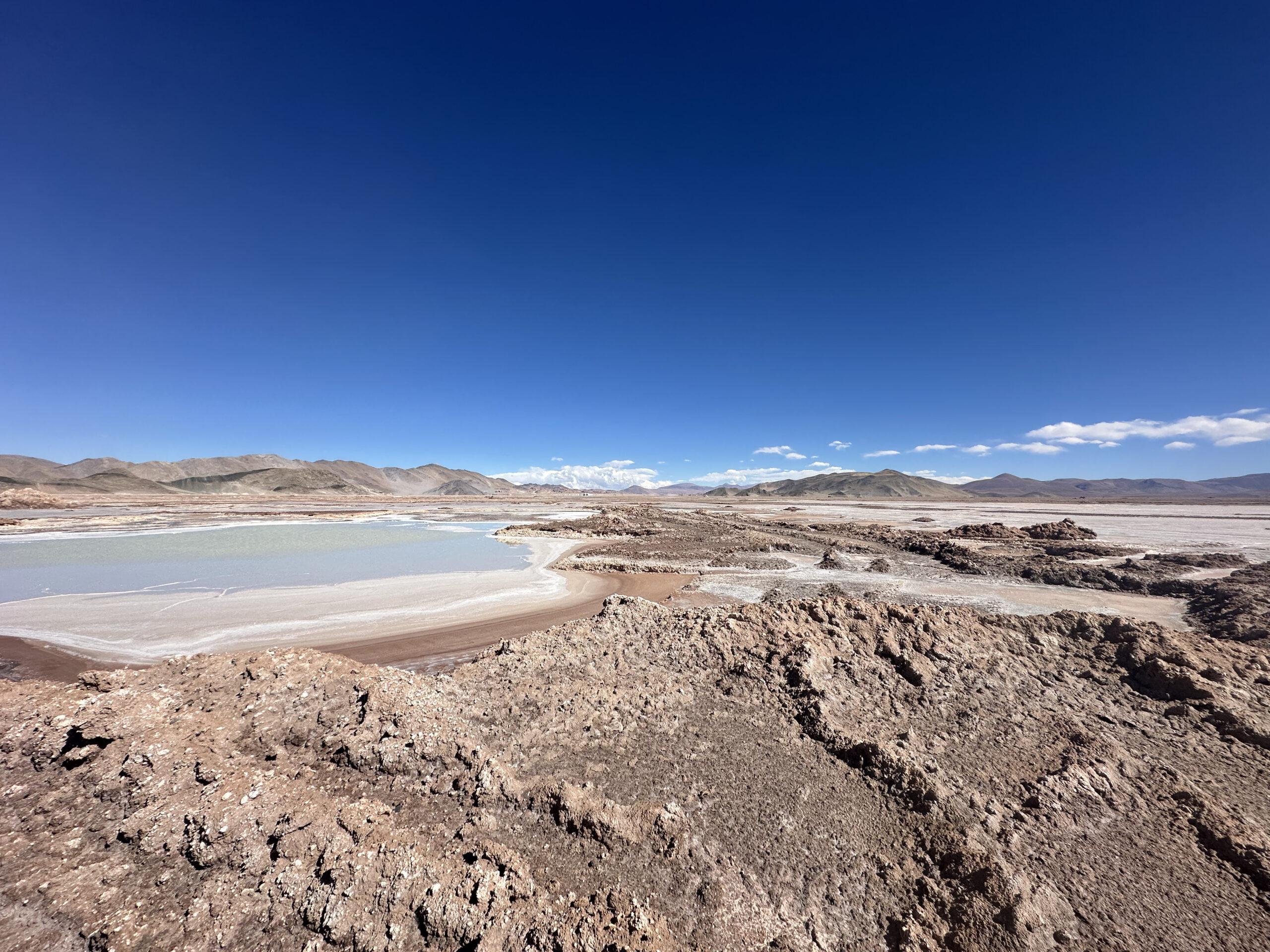
Indigenous communities and environmental organizations from Argentina, Chile, and Bolivia —members of the Andean Wetlands Alliance— gathered in the Province of Catamarca to visit the Salar del Hombre Muerto, in Antofagasta de la Sierra: a wetland severely affected by large-scale lithium mining.
Since 1997, lithium extraction by Minera del Altiplano S.A. —a subsidiary of Livent, currently owned by Rio Tinto— has caused significant environmental damage at Salar del Hombre Muerto. This includes the drying of a 5-kilometer arm of the Trapiche River wetland, an impact that persists to this day.
Currently, 12 lithium projects are underway in the area, at different stages of development. In response to the damage to the Trapiche River, and plans by five mining companies to extract water from the Los Patos River, the local community filed a lawsuit. In 2024, the Supreme Court of Catamarca recognized the damage to the Trapiche wetland and ordered the provincial government to refrain from granting new mining permits in the Los Patos River basin until a comprehensive cumulative environmental impact assessment is completed.
A year later, the provincial administration submitted a report that fails to comply with the ruling: it relies on outdated information and omits analysis of real cumulative impacts, concluding —without technical basis— that there are no negative effects on the Los Patos River. The Supreme Court of Catamarca must now determine whether the study satisfies the ruling or should be rejected as insufficient.
Elizabeth Mamani, from the Atacameños del Altiplano Indigenous community in Antofagasta de la Sierra, stated: “One of the consequences of mining was the death of one of the Trapiche River wetlands, the loss of animals, and the diversion of the Los Patos River.”
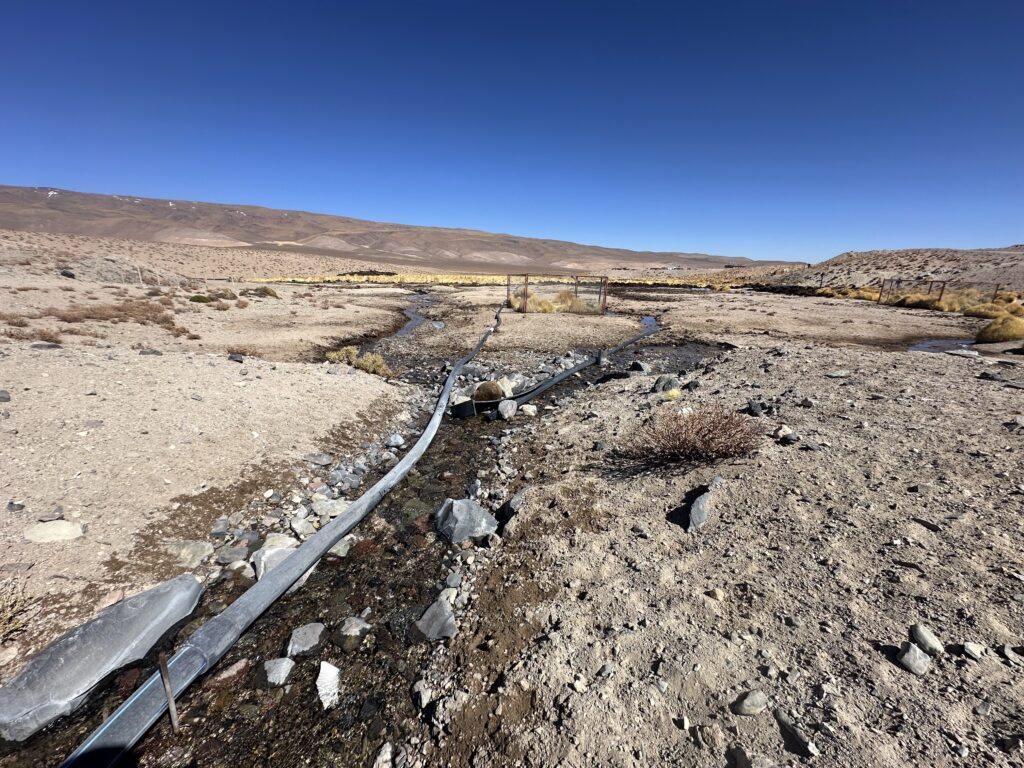
From Jujuy Province, Franco, a member of the Indigenous community of Tusaquillas in the Salinas Grandes and Laguna de Guayatayoc basin, warned: “In Jujuy, mining companies are trying to enter our territory without consulting communities. Fundamental rights are being violated: our right to decide, to preserve our cultural identity, and above all, our collective right to water. For us, lithium extraction is tragic; it means death, because they are taking the water. In Catamarca, we saw what should never happen — the Pachamama, the land and its inhabitants, are being abandoned.”
From Chile, Rodrigo Espíndola Araya, of the Toconao community, emphasized the similarities between both countries: “What is happening in Catamarca is similar to what is happening in Chile, especially regarding water. We know this will be a major struggle against mining companies. As Indigenous Peoples, we fight for our water rights. But here in Argentina, it is shocking to see how mining companies cut off water to our brothers and sisters.”
Meanwhile, Cindy Quevedo Monardes, from the Colla Finca El Chañar community in Tierra Amarilla, Copiapó, Chile, shared: “It is deeply moving to see these landscapes in Catamarca — and also heartbreaking to witness the damage caused by a mining company in such biodiverse areas. Entire wetlands like the Trapiche River have been dried. Seeing this firsthand shows what could happen in other regions exposed to mining.”
Lithium mining threatens Andean wetlands
The Andean wetlands —salt flats, lakes, and lagoons— of Argentina, Bolivia, and Chile face serious risk due to the rapid expansion of lithium and other mineral extraction driven by demand from the Global North’s energy transition. More than 53% of the world’s lithium resources are concentrated in these ecosystems.
Provincial governments must conduct comprehensive environmental assessments that consider full and cumulative impacts on ecosystems. They must also guarantee public participation by local communities and ensure complete, accurate, and transparent environmental information, in line with the Escazú Agreement.
In this context, on July 3 the Inter-American Court of Human Rights issued Advisory Opinion No. 32 on the climate emergency and human rights, establishing key obligations for States and companies — including the duty not to roll back climate and human-rights protections.
The Court seeks to ensure the protection of human rights in the face of the climate emergency, which affects not only the right to a healthy environment, but also rights to life, personal integrity, health, water, food, property, and work, among others.