The Argentinian government is preparing to advance reforms to the country’s Glacier Protection Law, raising national and international concern about the future of critical freshwater reserves in the Andes. President Javier Milei has signaled his intention to revise environmental regulations he argues are restricting large-scale mining investment – particularly in lithium and copper, minerals central to the global energy transition.
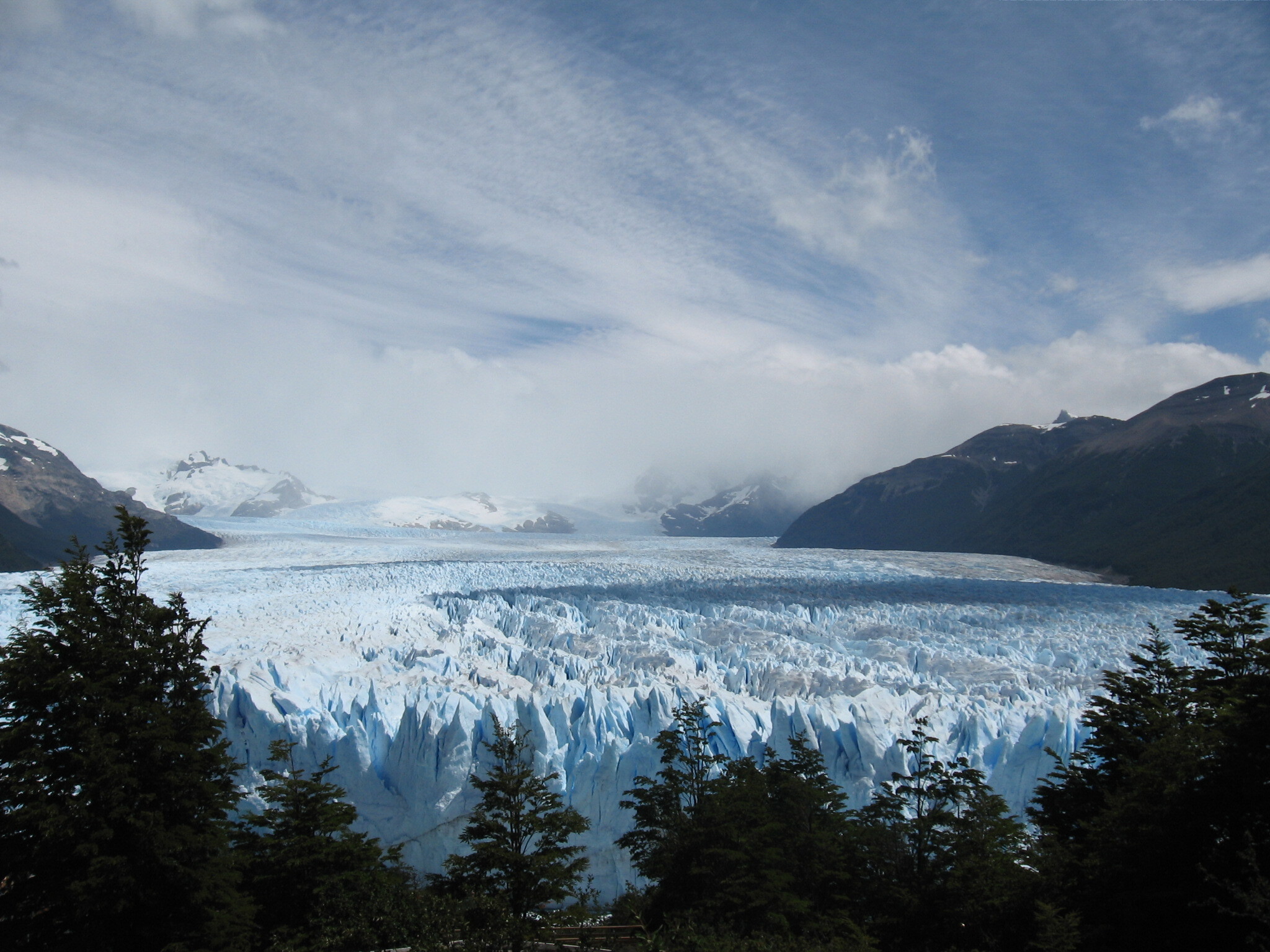
Enacted in 2010, Argentina’s Glacier Law is one of the world’s most comprehensive legal frameworks for protecting high-mountain ice and periglacial environments. It prohibits mining and other industrial activities in glacier and periglacial zones, which include permanent ice and frozen ground that play a critical role in sustaining major river basins and supplying water to millions of people in western and northwestern Argentina.
Government seeks to narrow glacier protections
Milei argues that the current definition of periglacial zones, areas containing permafrost or rock glaciers, is too broad and blocks mining projects with high economic potential. His administration is supporting proposals that would allow provincial governments, rather than the Argentine Institute for Snow Studies, Glaciology, and Environmental Sciences (IANIGLA), to determine which areas require protection.
Milei – who denies climate change and has censored environmental and scientific voices that contradict him at the state level – claims that the law is blocking million-dollar investments in lithium, copper, and other minerals. He has highlighted mining as a sector with “great opportunities to do business,” with the potential, he says, to create one million jobs.
This position is strongly backed by mining companies operating in the mineral-rich Andes. The Cámara Argentina de Empresarios Mineros (CAEM) argues that as much as 75% of mineral-rich areas are off-limits under the current law due to unclear definitions of periglacial environments. The industry warns that regulatory uncertainty could force projects with approved environmental permits to halt under shifting interpretations.
Glaciologists are divided over how to define protected zones
Argentina’s scientific community is split on how protections should be defined. IANIGLA warns that periglacial environments, defined by permafrost and freeze–thaw soil processes, hold significant quantities of long-term ice. Rock glaciers – characteristic features of periglacial environments – hold 35% to 70% internal ice and can supply between 25% and 50% of river flow during summer and drought conditions in the arid Andes.
IANIGLA, which maintains a national inventory of 16,968 glaciers from Jujuy to Tierra del Fuego, stated last week that it was not consulted about the proposed reform – even though many of the areas under debate coincide with regions of mining interest.
Other glaciologists argue that not all periglacial areas act as strategic water reserves. They support a reform that would allow regulated mining in high-altitude areas where permafrost does not contribute meaningfully to local water supply. These scientists are calling for more precise hydrological assessments before prohibiting development.
Silvio Pastore, head of glaciology studies at the University of San Juan, says that ambiguities in the law should be clarified so mining or hydrocarbon activity could be allowed in some periglacial environments, provided that water resources remain protected. He maintains that provinces should determine which zones to protect, based on whether they qualify as strategic reserves.
However, not all researchers agree. Lucas Ruiz, who left IANIGLA this year to join an environmental consultancy in Chile, says that “no Conicet scientist can contradict the President without risking censorship.” He stresses that periglacial environments, as defined in the law, do not exist at low or mid-mountain altitudes, and that the presence of permafrost alone should not automatically prohibit mining unless its hydrological significance is demonstrated. He notes that some non-glacial areas may also warrant protection.
Ruiz acknowledges global demand for minerals like lithium and copper for the energy transition, but says that development must proceed with minimal impact and with full consideration of entire watersheds, not only glacier or periglacial zones. Maintaining a healthy environment should be the baseline for any development, though determining hydrological significance requires clear standards and stronger oversight.
Environmental groups warn of severe risks
Environmental organizations strongly reject any reform to the glacier law. Greenpeace says that modifying the law would “mean reducing the protection of the country’s most important fresh-water reserves in the midst of a water and climate crisis.” Greenpeace warns that changing the law to exclude small glaciers or large parts of the periglacial environment is scientifically incorrect and dangerous.
Greenpeace says that this is a decision that directly impacts national water security and the lives of millions of people. Glaciers and periglacial areas constitute some of the largest freshwater reserves in the world: they store winter snow/ice and release water gradually during summer, feeding rivers and streams in mountain watersheds, while also helping to stabilize global climate, reflecting solar radiation and buffering temperature rises.
In Argentina, these frozen reserves feed 36 river basins covering over 1 million km² – crucial especially in the so-called South American Arid Diagonal, a region naturally poor in water. In the Andes, from Jujuy to Mendoza, are now among the most threatened by mining projects. Periglacial zones are key to sustaining summer water flows once winter snow is gone.
Evidence of retreat is already glaring: 48 of the 50 largest glaciers of the Southern Ice Field are shrinking. The surface area covered by glaciers in the arid Andes (from Jujuy to northern San Juan) decreased by 17% over the last decade. In the Central Andes (especially San Juan and Mendoza), the exposed ice surface dropped 36% between 1986 and 2020.
If approved, the change could allow mining in previously protected zones, raising the risk of contamination disasters like those seen in past mining operations, such as the cyanide and mercury spills in the Veladero mine.
Beyond environmental harm, Greenpeace warns the reform could have heavy economic impacts: reducing water for agriculture, tourism, and local consumption, and replacing natural mountain-based water regulation with expensive infrastructure.
More than 25 civil-society organizations have released a joint statement rejecting any attempt to modify the legislation, emphasizing the technical, scientific, and legal foundations that supported its approval in 2010 and warning of the risks of weakening existing protections. The Environment and Natural Resources Foundation (FARN) stresses that glaciers and periglacial environments sustain rivers, ecosystems, and livelihoods, and should not be sacrificed for private gain. In the context of overlapping climate, ecological, social, and economic crises, the organization urges decisions grounded in long-term environmental and social considerations rather than short-term business interests.
Global relevance
The debate comes as global demand for lithium, copper, and other critical minerals continues to rise for the energy transition. Argentina holds some of the world’s largest lithium reserves and major undeveloped copper deposits, placing the country at the center of supply chains for renewable energy technologies.
Reforming the Glacier Law could accelerate Argentina’s role in global mineral markets, but environmental experts warn it may undermine water security for millions and weaken one of the region’s key climate-adaptation safeguards.
The Milei administration is expected to introduce its proposed reforms to Congress in the coming months. Scientific institutions, environmental organizations, and affected communities are calling for full transparency, public participation, and independent hydrological assessments before any modifications are approved.