Every February 2, World Wetlands Day is observed as an opportunity to raise awareness about the importance of these ecosystems for life on Earth and their role in confronting the ecological and climate crisis. Yet over the past 300 years, 87% of the planet’s wetlands have disappeared, and their degradation continues at an alarming pace. Since 1970 alone, 22% of the global wetland area has been lost.
Traditional knowledge and the communities that have inhabited these ecosystems for centuries play a fundamental role in their protection and is part of their cultural identity. Therefore, the Ramsar Convention has chosen this year’s theme: “Wetlands and Traditional Knowledge: Celebrating Cultural Heritage.”
Wetlands at Risk
Wetlands are ecosystems of immense biological, social, cultural, and economic value. They are areas of land that remain temporarily or permanently flooded due to natural or artificial causes. Water is the central defining element of their physical characteristics, vegetation, wildlife, and the relationships between the different components of the ecosystem. Water may come from the sea, rivers, glacier melt, rainfall, or underground aquifers.
“Wetlands are increasingly threatened by the advance of private and corporate interests that deepen the degradation and loss of these environments day by day. The absence of protection policies and the promotion of productive practices that run counter to maintaining their ecological integrity is short-term gain at the cost of long-term loss,” said Ana Di Pangracio, Deputy Executive Director of the Fundación Ambiente y Recursos Naturales (FARN).
According to a report published in 2025 by the Convention on Wetlands, since 2017, there has been an increasingly widespread deterioration in the ecological characteristics of wetlands in most regions worldwide. This deterioration is particularly severe in Latin America, the Caribbean, and Africa, but it has also intensified in Europe, North America, and Oceania.
“The scale of wetland loss and degradation remains a global concern, with far-reaching consequences for people and nature,” the report states.
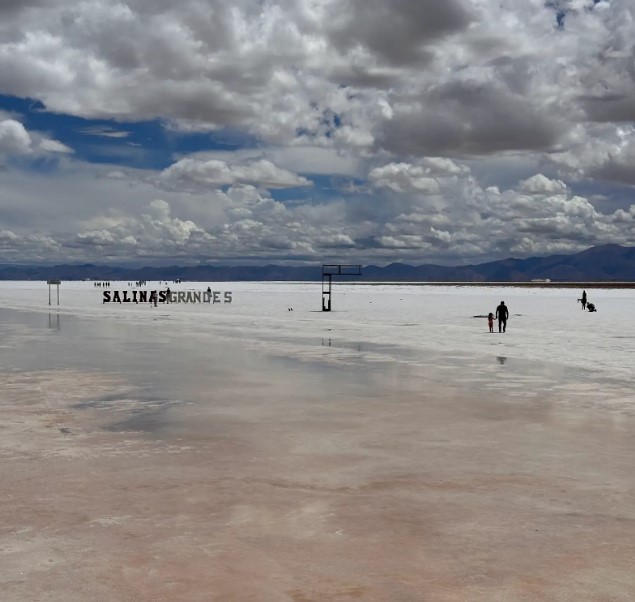
In this global scenario of environmental decline and geopolitical tension, the advance over Andean wetlands – including salt flats, lakes, and lagoons – in Argentina, Bolivia, and Chile is especially alarming. These regions hold more than 53% of the world’s lithium reserves. The growing demand for this mineral from the Global North has driven an accelerated process of extraction and production, placing intense pressure on these ecosystems and the communities that inhabit them.
In Argentina, the Andean wetlands that are threatened by lithium mining are located in the provinces of Catamarca, Salta, and Jujuy. Indigenous communities there have been resisting for years, through mobilizations and legal action, in response to the violation of their rights and the environmental impacts of lithium and borate mining projects on their territories.
Franco Vedia, a member of the Tusaquillas Indigenous community of the Salinas Grandes and Laguna de Guayatayoc Basin in Jujuy, said that companies continue to advance over the salt flats and that the Argentinian State is failing to comply with existing regulations and its obligations, including the duty to consult the communities that live on the land.
“Wetlands are part of who we are. Protecting them is essential because they are a source of life. Lithium extraction is devastating because it takes away the water. It means death. That is extremely serious,” said Vedia.
Ancestral Knowledge: A Path Toward the Future
The Inter-American Court of Human Rights (IACHR), a key body in defining human rights standards for Latin America and the Caribbean, highlighted in Advisory Opinion 32 (OC-32) the importance of Indigenous knowledge, wisdom, and worldviews in addressing the climate and ecological crisis. This must be done fairly and effectively, while fully respecting human rights and planetary boundaries. It also recognized the responsibility of States and corporations in relation to climate change.
“For decades, communities have shown us the importance of wetlands and how they must be cared for. Even though their voices are still ignored by local political decision-makers, international spaces are increasingly recognizing the central role of communities and their knowledge as guardians of life and nature, reaffirming their rights to self-determination and to free, prior, and informed consent,” said Pia Marchegiani, Deputy Executive Director of FARN.
On June 27, 2025, ten Indigenous communities from the Red Torna Lickana, located in the Salinas Grandes and Laguna de Guayatayoc Basin, succeeded in having their territory registered as a “Territory of Life” in the ICCA Registry (Territories and Areas Conserved by Indigenous Peoples and Local Communities). This recognition highlights their essential role in nature conservation through the management and protection of high Andean wetlands.
This is the first territory in Argentina to be incorporated into this global platform of territories with autonomous community governance, where communities act as custodians through their own systems of management and decision-making. They establish rules for land use and care based on traditional knowledge and governance practices. ICCAs stand out for their significant contribution to nature conservation through the preservation and sustainable use of ecosystems, habitats, species, and landscapes.
“This achievement makes visible the central role of communities in protecting Andean wetlands, which are threatened by the demand for minerals from the Global North. It reflects their deep connection to the territory and the essential value of their knowledge for nature conservation, in line with what is established in multiple international biodiversity frameworks,” said Laura Castillo, coordinator of FARN’s High Andean Program.