
2025 emerged as one of the most difficult years for environmental protection in Argentina. A national government that openly denies the climate crisis – combined with sweeping deregulation and deep cuts to environmental agencies – enabled an unprecedented expansion of high-impact extractive activity without adequate safeguards. Key protections for forests, wetlands, glaciers, and water sources came under attack. Mechanisms for community consultation were sidelined, oversight structures were removed, and the populations most vulnerable to environmental degradation – Indigenous peoples, rural communities, and those living near extractive operations – have been left increasingly unprotected.
Yet in this hostile landscape, FARN stood firm.
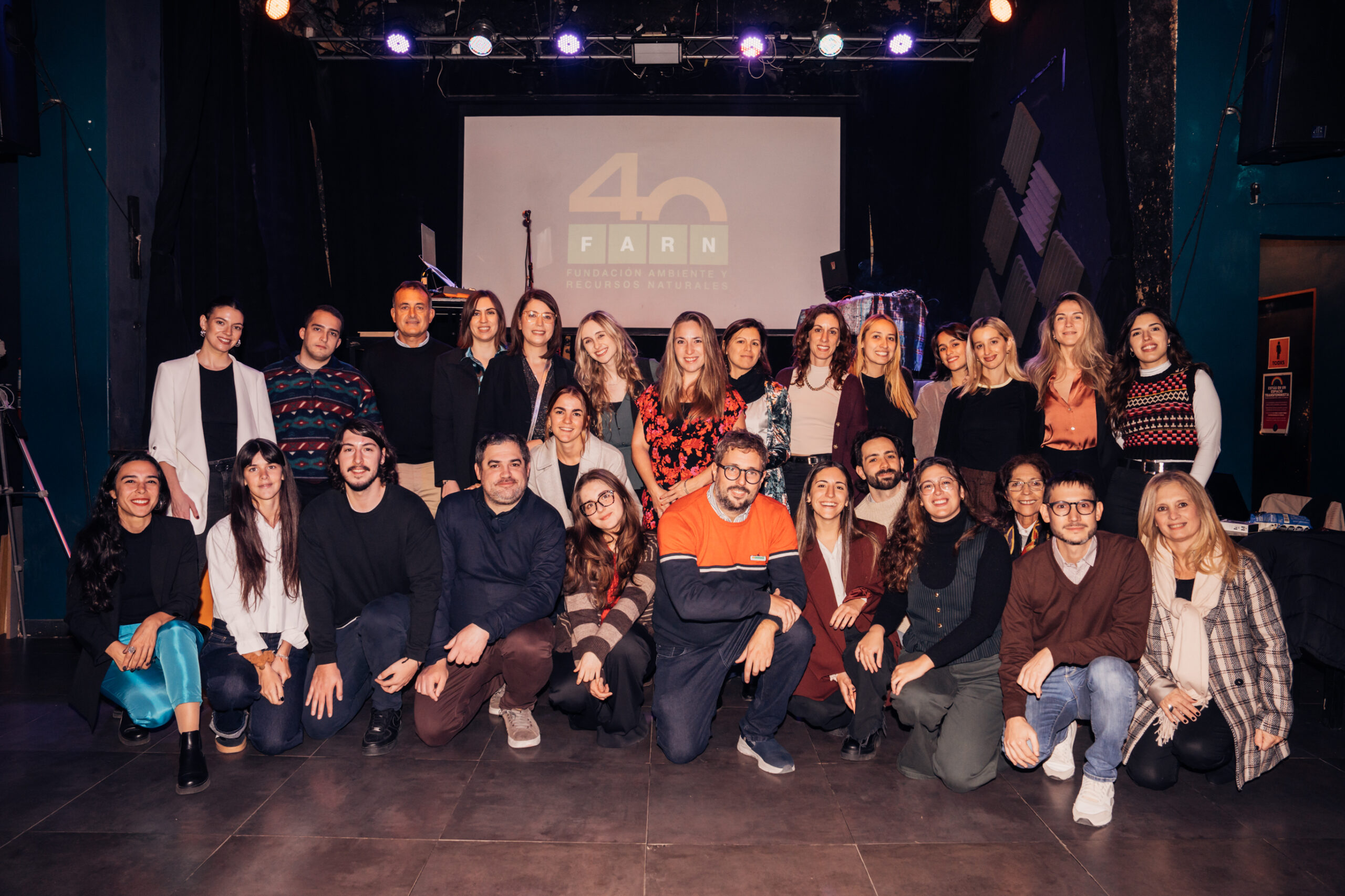
Amid these difficulties, we marked our 40th anniversary this year. Since our founding, FARN has upheld a consistent vision: to protect the environment and defend human rights through rigorous evidence, legal action, public-policy engagement, and close collaboration with communities. Across four decades, we have worked with governments of diverse political orientations and through profound economic and social shifts, always maintaining our independence, our scientific and legal rigor, and our commitment to environmental justice.
The severity of the current political landscape has only intensified the importance of this work. Today, FARN is one of the few organizations in Argentina capable of providing the legal, technical, and advocacy capacity needed to hold governments and corporations accountable and to defend the people standing at the front lines of environmental harm.
What follows is an overview of our achievements this year, demonstrating the resilience of our mission and the collective effort of the communities, organizations, and partners that enabled us to defend and reaffirm our purpose throughout this challenging year.
Defending Indigenous Rights and Territorial Integrity
2025 marked significant legal and political advances for Indigenous rights in Argentina. Through long-standing partnerships with the communities of Salinas Grandes and Laguna de Guayatayoc, FARN helped secure:
- A ruling from the Supreme Court of Jujuy ordering access to environmental information about lithium and borate concessions.
- A landmark decision from the National Supreme Court, which accepted jurisdiction in a long-running human-rights case linked to mining projects in Indigenous territories.
International bodies – including the IACHR (REDESCA), the IUCN, and the World Bank – also recognized the legitimacy of the communities’ claims. These achievements reinforce a central principle: the energy transition must respect human rights and Indigenous sovereignty.
Advancing Global South Leadership in International Environmental Arenas
Throughout 2025, FARN worked to ensure that the experiences of Argentine and Latin American communities were represented in global decision-making spaces:
- COP30 in Belém, where we supported Indigenous leaders in advocating for a human-rights-centered climate agenda.
- EU Raw Materials Week in Brussels, where we provided information on the socio-environmental impacts of lithium extraction in the region, and supported local communities who testified on the effects of mining in wetlands across Argentina, Chile and Bolivia.
- The IUCN World Conservation Congress, which approved two motions sponsored by FARN, in alliance with regional organizations, to protect Andean wetlands and the Gulf of San Matías.
These interventions positioned FARN as a bridge between territorial realities and global climate policy.
Strengthening Environmental Policy and Democratic Governance
Amid widespread institutional dismantling, FARN continued to produce rigorous legal and scientific analysis to defend environmental protections:
- We supported the historic implementation of the Santa Catalina Provincial Nature Reserve, the result of two decades of community advocacy.
- We challenged environmentally harmful public works, including the new Canal de la Patria project, before the National Supreme Court.
- We mobilized broad resistance against attempts to weaken the 2010 Glacier Law, reaffirming its importance in protecting Argentina’s water sources.
- Through the Environmental and Climate Observatory, we published findings on the implementation of the Escazú Agreement and filed transparency claims demanding access to seismic data related to fracking in Vaca Muerta.
Monitoring Extractive Expansion and Climate Risks
Alongside leading human rights and environmental organizations, FARN launched the Observatorio del RIGI, the country’s first independent monitoring initiative analyzing the socio-environmental impacts of Argentina’s new large-investment regime.
We also advanced essential national climate research on methane emissions, fossil-fuel subsidies, distributed renewable energy, and the financial and institutional challenges of the energy transition. Our recommendations informed debates surrounding Argentina’s NDC 3.0 and the application of the national Climate Change Law.
Strengthening Alliances, Community Participation, and Public Communication
FARN deepened its collaboration with regional and national networks:
- The Alianza por los Humedales Andinos, which elevated alerts to the Ramsar Convention regarding critical risks to theses ecosystems.
- Golfo Azul Para Siempre, a coalition of organizations and local communities defending the Gulf of San Matías from offshore fossil expansion.
We also published the 17th Informe Ambiental FARN, which included more than 40 articles by experts, journalists, and community voices. This was accompanied by a podcast series and public events that expanded environmental awareness during a period in which environmental information and participation were increasingly restricted.
FARN’s work in 2025 demonstrates that even in the most adverse political conditions, progress is possible when evidence, community strength, and democratic principles converge. As we close the year, we reaffirm our conviction that environmental protection and human rights are inseparable pillars of our future.
Much remains to be done, and the road ahead will require shared commitment. But we know there is much to protect, many rights to defend, and – now more than ever – a profound need to sustain, envision, and build.