
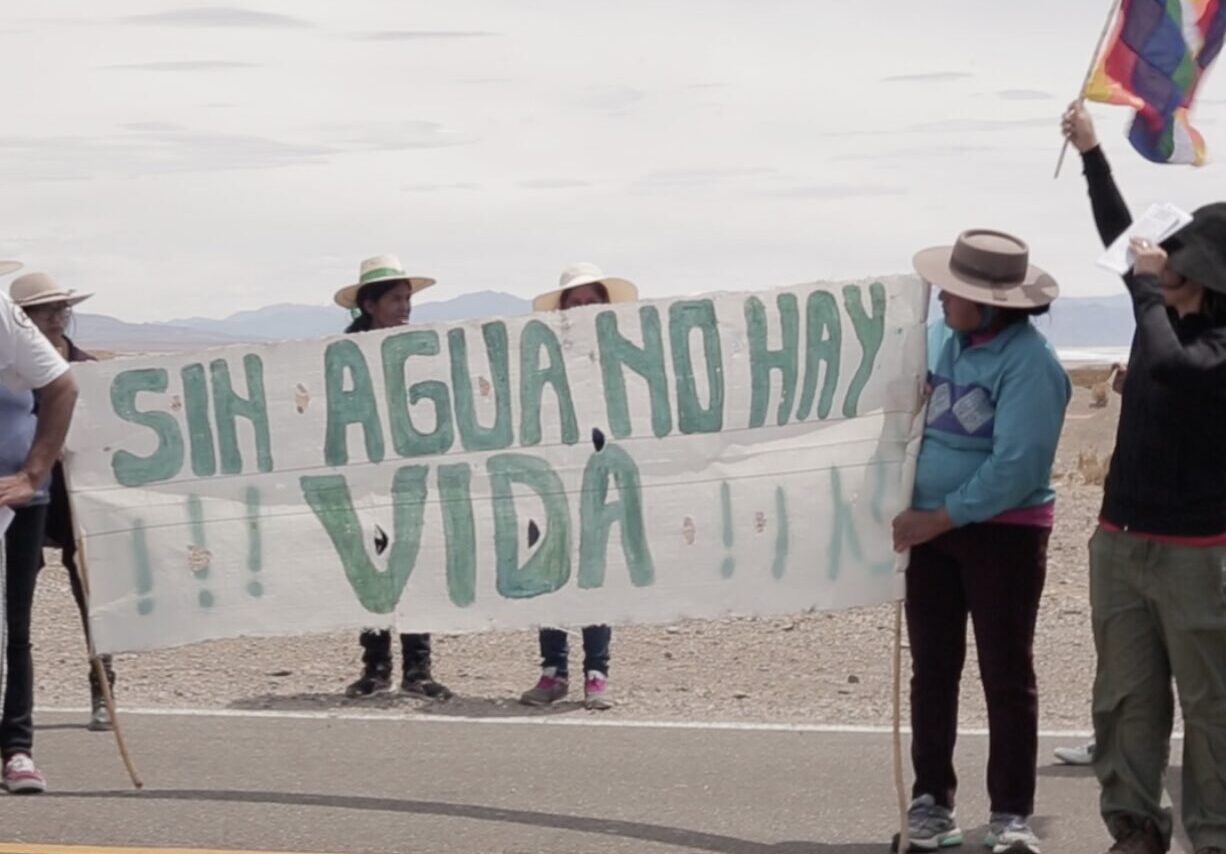
The Salinas Grandes, shared between the provinces of Jujuy and Salta, is one of the largest salt flats in South America. Beneath it lies another resource: lithium, the mineral driving the global race for batteries that power the energy transition.
“Lithium activity is water mining,” said Franco Vedia, a member of the Indigenous community of Tusaquillas. “It consumes vast amounts of water in the Puna – a resource already scarce and extremely valuable here.”
Across Argentina’s northern provinces, environmental groups warn that lithium extraction has already dried rivers and degraded fragile Andean wetlands. The struggle of the Puna communities mirrors that of others across the Gran Atacama region – spanning Argentina, Chile, and Bolivia – the so-called lithium triangle, home to more than half the world’s known reserves.
For more than 10 years, the Indigenous communities of Salinas Grandes and Laguna de Guayatayoc have resisted the entry of lithium companies. Mining projects have advanced without basin-wide environmental assessments or reliable baseline data – in a region already parched and vulnerable to climate change.
Their defence is of water, life, and human rights: the right to information, participation, and free, prior, and informed consent, guaranteed under the UN-brokered Escazu Agreement, and the International Labour Organization’s Convention 169, a binding agreement concerning the rights of Indigenous peoples.
To protect their rights, the communities have taken their claims to national and international courts and created the Kachi Yupi Biocultural Protocol to define how consultation must take place. Supported by organizations such as FARN, they are building networks of technical and legal assistance.
As COP30 gets underway, the proposed Belém Action Mechanism (BAM) – a civil-society call for a global just transition rooted in rights and ecological integrity – offers a path towards the transformation Vedia’s community demands.
His message to Belém is simple and urgent: “The energy transition cannot be built on the destruction of water. True progress means caring for life.”