
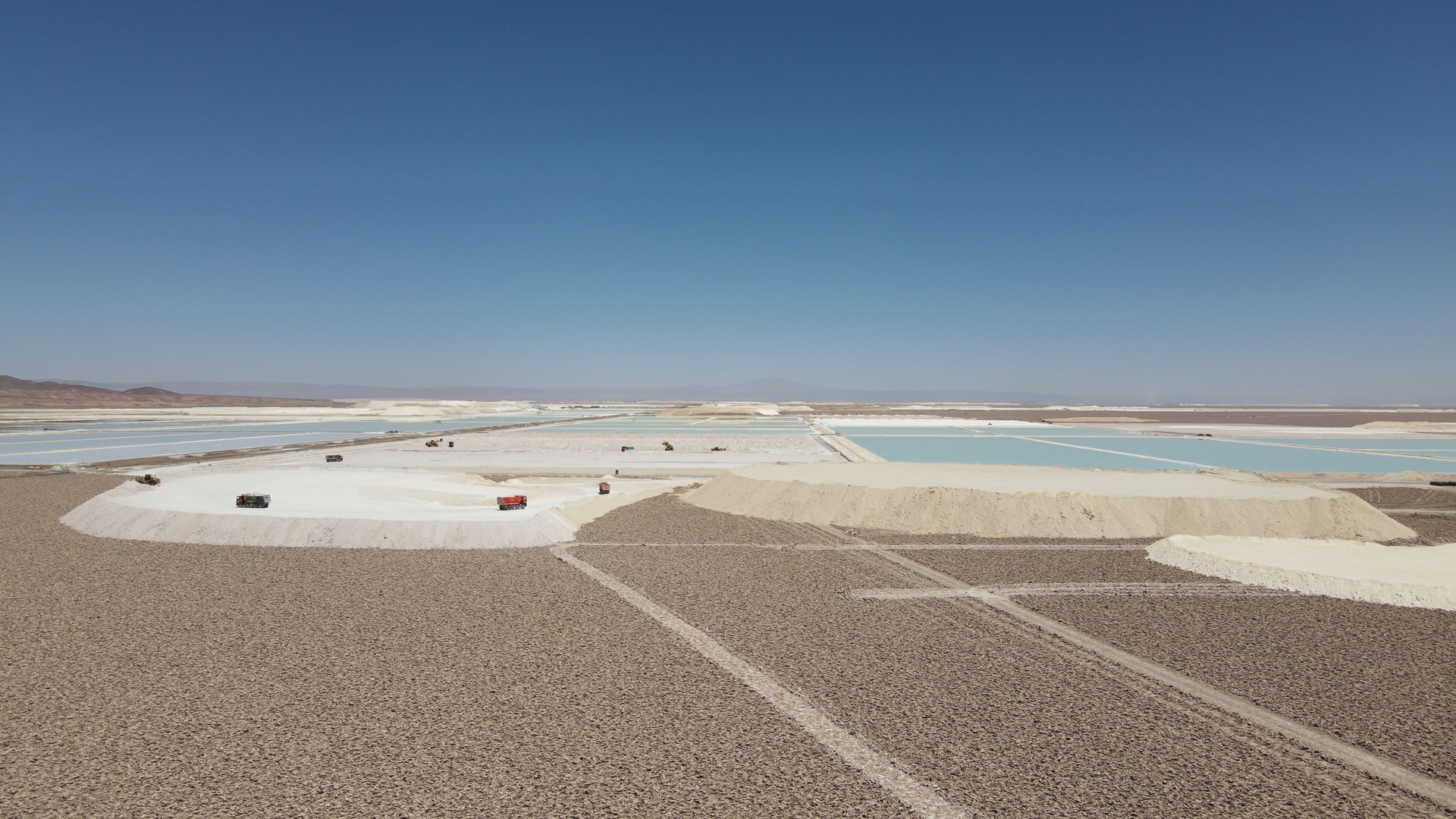
The undersigned Latin American organizations are concerned about the current geopolitical landscape, which continues to place our region at the center of global extractive conflicts, threatening its ecological and sociocultural value, as well as the rights and ways of life of the peoples and communities who inhabit these territories.
In recent years, minerals such as lithium, copper, nickel, cobalt, gold, silver, and rare earth elements have become increasingly important because of their role in strategic areas such as energy transition, the military industry, and artificial intelligence. This expansion is driving a sharp increase in demand while tying certain minerals to objectives that go beyond climate policies aimed at decarbonization, increasingly placing them at the heart of security, technology, and trade agendas. These trends are intensifying amid growing competition among major powers and a broader crisis of the international order, marked by armed conflicts and the erosion of basic commitments to human rights, the rights of nature, and the protection of the planet.
In this context, some countries and regions in the Global North have classified these minerals as “strategic” or “critical” based on criteria that reflect their own interests, rather than the specific uses of each mineral. Rare earth elements, for example, which are used in defense systems, radar, and military technologies, have come to be viewed as a matter of national security in the United States, particularly given China’s dominant position across various stages of their value chains, as well as those of other minerals deemed strategic.
Major powers and global blocs, including the United States, China, the European Union, and the BRICS countries— with China playing a leading role—are pursuing different strategies that share a common goal: securing access to these minerals and strengthening their position along their value chains. To achieve this, they rely on trade and investment protection agreements, tariffs, and other economic policy tools, including financing, acquiring stakes in, or directly participating in extractive and infrastructure projects.
This situation once again makes Latin America a key supplier of raw materials, while innovation, technological development, industrialization, and value creation remain concentrated in the Global North. This constrains the autonomy of countries in the Global South, which also face considerable international pressure when they seek to regulate mineral extraction or strengthen their position in global value chains.
Within the region, the growing geopolitical importance of these minerals comes amid a broader push for deregulation agendas aimed at attracting investment and fast-tracking extractive projects. We are seeing a selective reshaping of the role of the State: while the capacity to protect the environment and uphold human rights is being weakened, the capacities linked to security, surveillance, and protecting activities deemed strategic are being strengthened. This is compounded by a broader trend toward loosening environmental assessment requirements and shrinking civic space, as reflected in restrictions on public participation and the criminalization of human rights and environmental advocates.
These trends undermine the democratic conditions needed for open, participatory debate on public policy decisions and put further pressure on territories and local communities, including Afro-descendant, Indigenous, and peasant communities, as well as other social groups, often in areas already affected by conflict and social and climate vulnerability. Additionally, these territories are part of the most biodiverse region on Earth, one of the richest in cultural diversity. This region is home to fragile, ecologically valuable ecosystems, such as wetlands, páramos, and tropical forests, which play a vital role in regulating the climate, sustaining biodiversity, and supporting the livelihoods of the communities and peoples who live there.
Latin America is thus at the center of a new global contest over raw materials, shaped by narratives of security, sustainability, and development that coexist with the risks of greater dependency, diminished sovereignty, deepening inequality, and the (often irreversible) loss of natural heritage. In this context, there is a need to build a regional agenda to protect human rights and biodiversity in extractive contexts. This means strengthening the role of civil society and communities working across local and global levels in developing strategies for a fair socio-ecological transition and alternatives to the global production and consumption model that lies at the root of the crisis.
For these reasons, the undersigned organizations address the governments of Latin America and the Global North, international and multilateral organizations, international financial institutions, companies, and other stakeholders with responsibility for and influence over mining, energy, and transition policies, and state as follows:
1) Human rights should be the starting point for, and impose clear limits on, any definition of the energy transition and energy policy.
No goal related to decarbonization, energy security, or attracting investment can justify human rights violations. Special attention should be paid to Indigenous and tribal peoples, Afro-descendant peoples and communities, peasant communities, and other communities and social groups, with respect for their ways of life, forms of social organization, and relationships with the territories they live in. Specifically, these human rights include the right to a healthy environment; territorial rights; the rights to self-determination and cultural identity; and the rights of access to information, public participation, and justice. In the case of Indigenous peoples, governments should guarantee their rights to consultation and participation, particularly the right to free, prior, and informed consent. Governments should strengthen their role as guarantors of these rights and should not delegate this responsibility to private actors.
2) The protection, conservation, and restoration of ecosystems that are particularly important to biodiversity and people—including, among others, Andean and Amazonian ecosystems—should be ensured.
The region is home to an exceptional share of the world’s biodiversity and ecosystems of high environmental integrity. Conserving them is essential both for the peoples and communities that depend directly on them, and for maintaining their ecological functions and contributions to people, including water, air, and climate regulation, soil health, food provision, and protection from risks and disasters. In line with the Kunming-Montreal Global Biodiversity Framework, governments should adopt effective measures to halt the loss of key biodiversity areas; conserve and restore ecosystems; maintain and strengthen their integrity, connectivity, and resilience (which includes creating exclusion zones for extractive activities, protected areas, Ramsar sites, and ICCAs, among others); and apply robust environmental planning instruments based on scientific evidence, such as cumulative environmental impact assessments, to prevent environmental harm. These obligations should be implemented through a human rights-based approach that recognizes and respects the rights, territories, knowledge, and contributions of Indigenous peoples and local communities, including women and young people, and ensures their full and effective participation.
3) All energy transition proposals or horizons should respect planetary boundaries and reassess levels of mineral, material, and energy consumption, especially in the Global North.
Technological substitution and the replacement of fossil fuels with other energy sources will not be enough to address the planetary crisis unless current patterns of production and consumption, as well as net energy consumption, are also reassessed and transformed. Mineral and energy demand should be reduced, particularly in countries with higher consumption levels, and solutions that lead to increasing levels of extraction under the banner of decarbonization or innovation should be challenged. This also means respecting and strengthening other forms of well-being and ways of relating to nature, as well as fairer and more sustainable forms of coexistence among people and other living beings.
4) The final destinations and uses of minerals extracted from the region should be transparent and traceable, and should contribute to purposes compatible with peaceful human coexistence and survival on the planet.
The different labels applied to certain minerals, such as “transition,” “critical,” “strategic,” or “of public interest”, are not neutral: they have political, economic, and regulatory consequences that do not necessarily respond to humanity’s shared needs. Given Latin America’s longstanding commitment to peace and to dialogue-based solutions to conflicts between countries, the use of minerals sourced in the region for military purposes or the mass surveillance of people cannot be justified in any way. Every decision concerning the final destinations and uses of minerals should be subject to public, democratic, and collective scrutiny. Governments should establish transparency, traceability, and due diligence obligations that make it possible to identify the actors involved in value chains, the sectors they supply, and the final destinations and uses of minerals. Available information about these uses should form part of the information, participation, and consultation processes needed before such projects are approved.
5) The energy transition should be fair and democratic, and should promote the well-being of the population.
It should be understood as part of a broader, more holistic, territorially grounded, and pluralistic process of social and environmental transformation, capable of changing not only energy sources, but also the patterns of production, consumption, and waste that reproduce inequality. Decision-making on the transition cannot be left exclusively in the hands of technical or economic actors; it should be built upon broad deliberation and democratic participation processes.
6) Energy should be recognized as a right that enables the exercise of other rights, rather than solely as a commodity subject to market dynamics.
Access to safe, affordable, and clean energy is a fundamental condition for ensuring other basic rights, including the rights to health, food, education, and adequate housing. Energy policies should therefore prioritize universal access and explicitly address energy poverty, which affects the largest and most vulnerable sectors of the population.
7) Latin American countries should strengthen their political and fiscal autonomy so that they have the genuine capacity to define their own paths toward development and well-being.
Countries in the region should be able to determine their own strategies for reducing emissions and transforming their energy systems in accordance with their social, economic, and environmental needs, while addressing structural inequalities and ensuring civic and democratic participation. Their autonomy should not be subordinated to financial conditions or to the priorities or agendas defined by external actors, nor should such conditions, priorities, or agendas constrain the decision-making capacity of countries in the region.
Signatory organizations:
- Acción Ecológica – Ecuador
- Asociación Ambiente y Sociedad (AAS) – Colombia
- Asociación Argentina de Abogado/as Ambientalistas (AAdeAA) / Colectivo de Acción por la Justicia Ecosocial (CAJE) – Argentina
- CartoCrítica, A.C. – México
- Centro de Documentación e Información (CEDIB) – Bolivia
- Centro de Estudos e Pesquisas BRICS – Brasil
- César Sin Fracking y sin Gas – Colombia
- Climate Action Network Latin America – Regional
- CooperAcción – Perú
- Corporación Jurídica Libertad – Colombia
- Empodérate, Colectivo de Derechos Humanos – Bolivia
- Fiscalía del Medio Ambiente (FIMA) – Chile
- Formando Rutas SpA – Chile
- Fundación Ambiente y Recursos Naturales (FARN) – Argentina
- Fundación Tanti – Chile
- Fundación Terram – Chile
- Latinoamérica Sustentable (LAS) – Regional
- Observatório da Mineração – Brasil
- Red Muqui – Perú
- Red para la Justicia de los Recursos – Global
- Sustentarse – Chile