
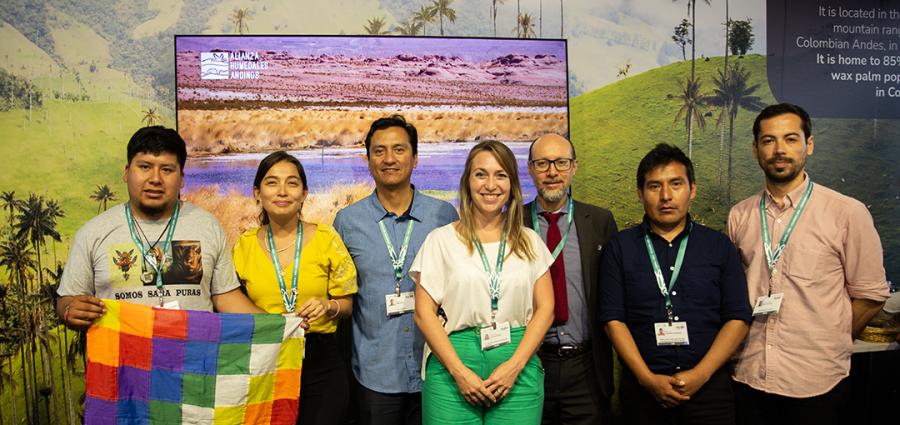
The “lithium triangle” is the area where Chile, Argentina, and Bolivia hold much of the world’s lithium. The race toward an energy transition, including lithium extraction, is placing Andean Wetlands at risk. This event asked attendees to look beyond the promise of energy transition and consider potential negative impacts of lithium mining in the region.
To address climate change, stakeholders have been clamoring for an energy transition to shift away from fossil fuels, in the hopes of achieving carbon neutrality by 2050. In this rush, however, other important issues can be overlooked, such as the impacts on biodiversity and on Indigenous communities affected by pressure for lithium mining, which is one of the ways through which an energy transition can be realized.
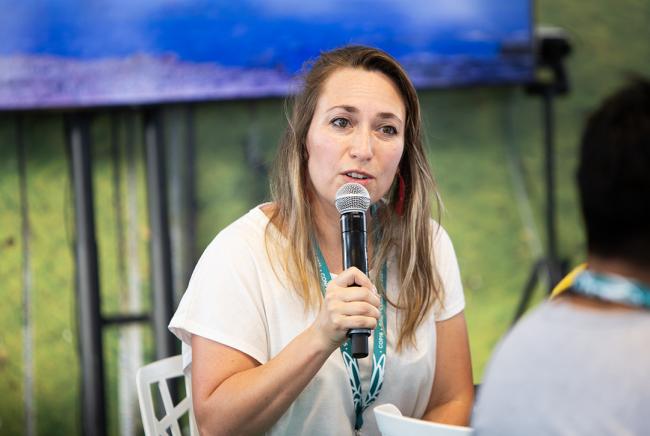
Laura Castillo, Fundación Ambiente y Recursos Naturales (FARN)
Laura Castillo, Fundación Ambiente y Recursos Naturales (FARN), moderating this event, began by highlighting the urgency of understanding the importance of Andean Wetlands and the need for their protection against a corporate energy transition that fails to consider the region’s vulnerabilities.
Panelists began by discussing the importance of Andean Wetlands in relation the goals of COP 16 and concerns regarding lithium mining, which is promoted as integral for an energy transition by the global North.