
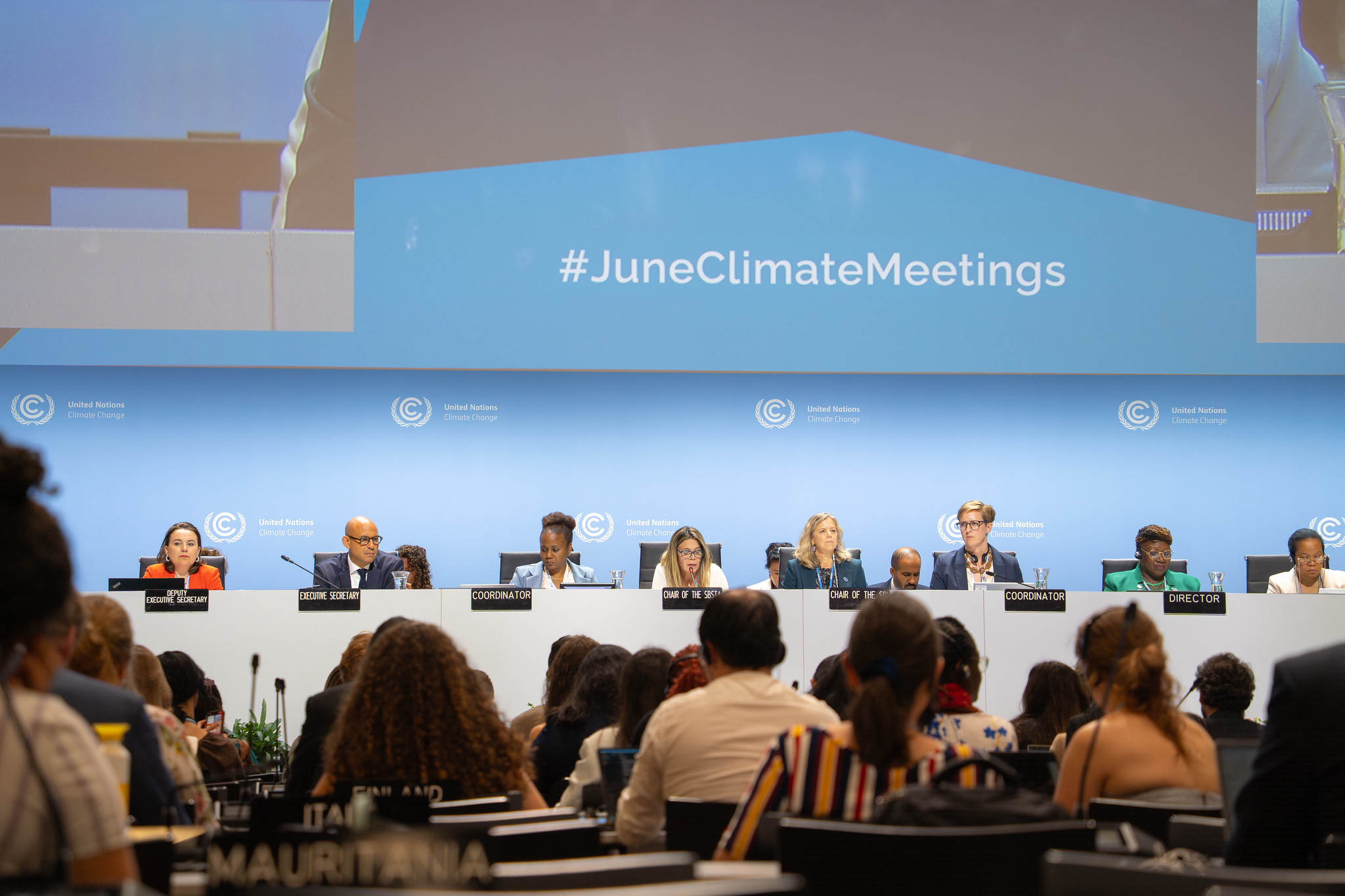
As part of the preparations for COP31, scheduled to take place next November in Antalya, Türkiye, the 64th Session of the Subsidiary Bodies (SB64) of the United Nations Framework Convention on Climate Change (UNFCCC) was held in Bonn, Germany.
The meetings, which took place from June 8 to 18, focused primarily on negotiations regarding the Just Transition Work Program (JTWP), particularly the initial discussions on the future Belém Mechanism for Just Transitions, agreed at COP30. Camila Mercure, Coordinator of FARN’s Climate Policy Area, travelled to Bonn to follow these discussions and coordinate with regional and international organizations and networks, including the Climate Action Network (CAN), where she serves as Co-Coordinator of the Just Transition Working Group and Coordinator of the Energy and Just Transitions Working Group of CAN Latin America (CANLA).
The Challenge of Moving from Discussions to Implementation
The central issue under discussion was the design of the future Belém Mechanism for Just Transitions, established at COP30. During the negotiations, Parties exchanged views on key aspects of the mechanism, including its scope, objectives, functions, modalities, and governance arrangements. However, a significant share of the discussions focused on the terms of reference for the review of the Just Transition Work Programme, which will take place at COP31.
While this progress was necessary, civil society organizations continue to call on countries to accelerate discussions on the substantive elements of the mechanism. Creating a tool capable of facilitating the implementation of just transitions requires progress on concrete definitions regarding technical assistance, capacity building, international cooperation, and means of implementation—especially for territories and communities facing the challenges and impacts of the current extractive model.
As a result of the session, the Parties agreed on the terms of reference for the review of the Work Program and advanced work on an informal note compiling various proposals submitted by countries regarding the future mechanism. Although this falls short of a final decision, it provides a basis for further negotiations in the lead-up to COP31.
Representing the Climate Action Network (CAN), Mercure intervened during one of the negotiating sessions on the Just Transition Work Programme, attended by delegations from Parties participating in SB64. During her intervention, she highlighted key priorities identified by organizations from the Global South to ensure that the mechanism can help translate commitments into concrete action. Among the main proposals is the need to strengthen international cooperation and provide effective support for the implementation of just transition strategies through technical assistance, capacity-building, technology development and transfer, and finance. She also underscored the importance of ensuring the meaningful participation of communities, workers, and other relevant stakeholders in both the design and operation of the mechanism.
Looking ahead to COP31
The 31st Conference of the Parties (COP31) to the United Nations Framework Convention on Climate Change will begin on November 9 in Antalya, Turkey. With an unprecedented split presidency, Australia will preside over the negotiations while Turkey hosts and leads the Action Agenda.
Looking ahead, both FARN and the organizations that make up CAN have identified the operationalization and adoption of the Belém Mechanism for Just Transitions as a key priority. The outcomes achieved in Bonn represent an initial step toward establishing a mechanism capable of supporting the development and implementation of just transition strategies in regions affected by current energy systems, including those experiencing the social and environmental impacts associated with mining and oil and gas extraction.
For a Just Transition in Latin America
As part of SB64, Mercure also took part in several activities linked to the debate around the need to move toward a just energy transition, with an emphasis on the perspective of territories and organizations in Latin America.
- Press conference Fossil Fuel Roadmaps for Energy and Economic Sovereignty, organized by Oil Change International.
- Climate Action Network press conference on the state of the negotiations, focused on those related to just transition.
- Climate Action Network Latin America press conference to present an assessment of the session and the need to translate commitments into real economic and social outcomes for the populations facing the worst impacts of the crisis.