
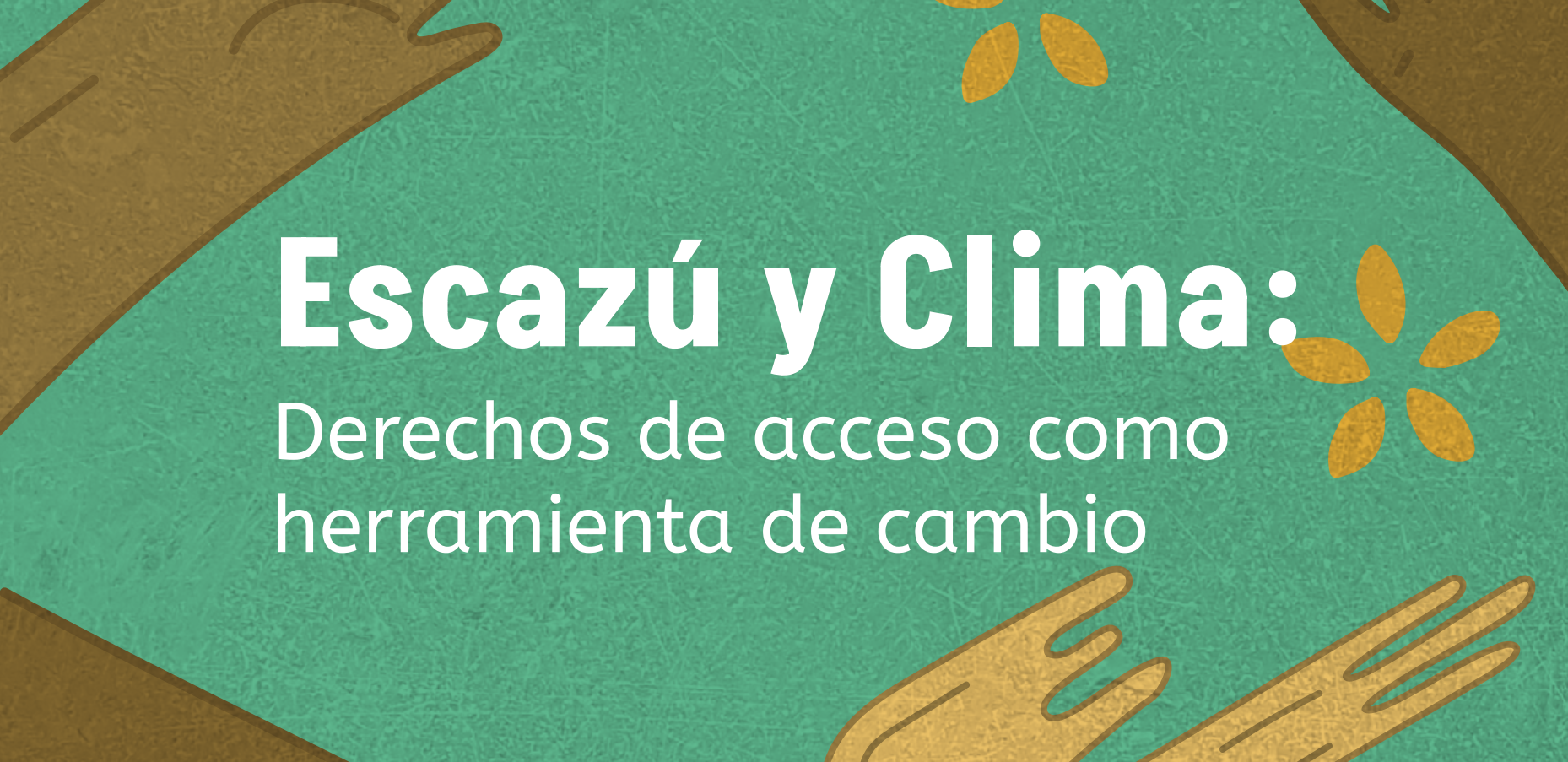
Edited by FIMA, with the participation of FARN, Asociación Ambiente y Sociedad, Grenada Land Actors, and CANARI, the publication seeks to serve as an inspiration to promote the implementation of the Escazú Agreement.
The book titled “Escazú y clima: derechos de acceso como herramienta de cambio” brings together experiences from organizations in Argentina, Chile, Colombia, Grenada, and the Caribbean, highlighting both advancements and tensions in the implementation of the Agreement. From contexts of climate denialism to challenges in transparency and participation, the chapters reveal a constant: there is a gap between what regulations establish and what actually happens in practice.
One of the book’s main core themes is environmental democracy, understood as the guarantee of three fundamental rights: access to information, public participation, and access to justice. To these, a fourth key element is added: the protection of human rights defenders in environmental matters, especially in a region where they face growing risks.
From there, it explores different national contexts that ground these challenges:
- From Argentina, Andrés Napoli and Cristian Fernández (Executive Director and Legal Area Coordinator at FARN, respectively) address the rise of climate denialism and institutional setbacks, demonstrating how the Escazú Agreement can operate as a tool to demand information, participation, and justice.
- In Chile, Mariana Carrasco, Carolina Palma, and Macarena Martinic (ONG FIMA) analyze climate transparency, showing that despite having robust regulatory frameworks, gaps persist in the access, quality, and use of information.
- The Colombian case, developed by María Paula González and Karol Sanabria (Asociación Ambiente y Sociedad), showcases the efforts to translate Escazú from law into practice, particularly in environmental assessment processes, along with the tensions that arise in a context of high conflict for environmental defenders.
- From the Caribbean, Kriss Davies (Grenada Land Actors) presents a territorial outlook on the implementation of the agreement, highlighting the role of communities in environmental governance against development pressures. Finally, Nicole Leotaud and Dylis McDonald (CANARI) broaden the regional perspective, underlining the role of cooperation and networks to strengthen climate justice in small island developing States.