
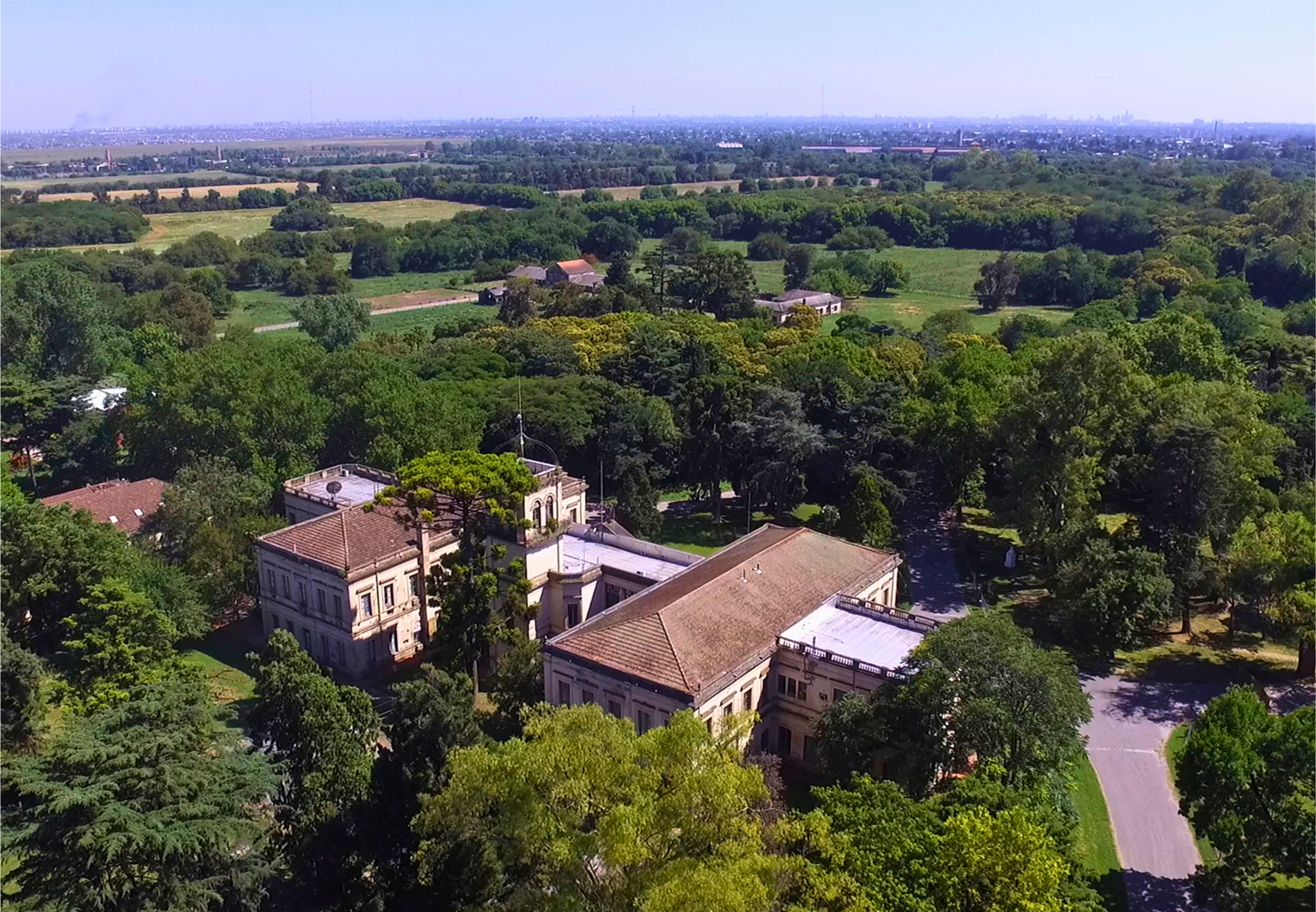
For years, community and environmental organizations worked steadily to protect Santa Catalina, one of the last remaining natural wetlands on the southern bank of the Matanza-Riachuelo basin.
Today, following a long-standing community advocacy and recognition from the provincial government and the Municipality of Lomas de Zamora, the Santa Catalina Provincial Natural Reserve is moving toward effective implementation, consolidating the protection of the largest green lung in Southern Greater Buenos Aires.
FARN accompanied this collective process by collaborating on environmental education and restoration actions, and by promoting the recognition of a biocultural corridor in the Matanza-Riachuelo basin, where Santa Catalina emerges as a hub of vital natural and cultural importance.
Documentary Video: “Stories from Santa Catalina Provincial Natural Reserve”
With the purpose of raising awareness about this initiative, we present the documentary video “Stories from Santa Catalina Provincial Nature Reserve”, a production by FARN in collaboration with the NGO Pilmayqueñ, the MagNa Museum and the Ministry of Environment of the Buenos Aires Province, with the support of the G20 Global Land Initiative grants programme.
This audiovisual project brings together collective voices, knowledge, and experiences linked to the conservation and restoration of this 700-hectare green space. It is nestled in the second most populated department of Greater Buenos Aires, where nature, history, and culture converge.
Historical, cultural value and biodiversity in Santa Catalina
Historically, Santa Catalina hosted major milestones, such as the beginning of university-level agricultural studies in Latin America, being the place where the region’s first agricultural engineers and veterinarians graduated. This event, among others, earned it specific designations as a national, provincial, and municipal historical site.
Currently, flora and fauna surveys in the reserve continue to yield surprising results. The wetland records a high richness across different biological families, and even species new to science.
Beyond its internal characteristics, Santa Catalina triggers a remarkable sense of wonder due to its location: it is a fully natural environment surrounded by an urban matrix.
And it is precisely because it is located in one of Argentina’s most important populated centers that the reserve holds enormous potential for environmental education, allowing hundreds of students to experience, often for the first time, entering a natural space.
After years of coordinated work among local communities, environmental organizations, and government authorities, the effective implementation of the Santa Catalina Provincial Natural Reserve marks a milestone in the protection of wetlands in the province of Buenos Aires.