
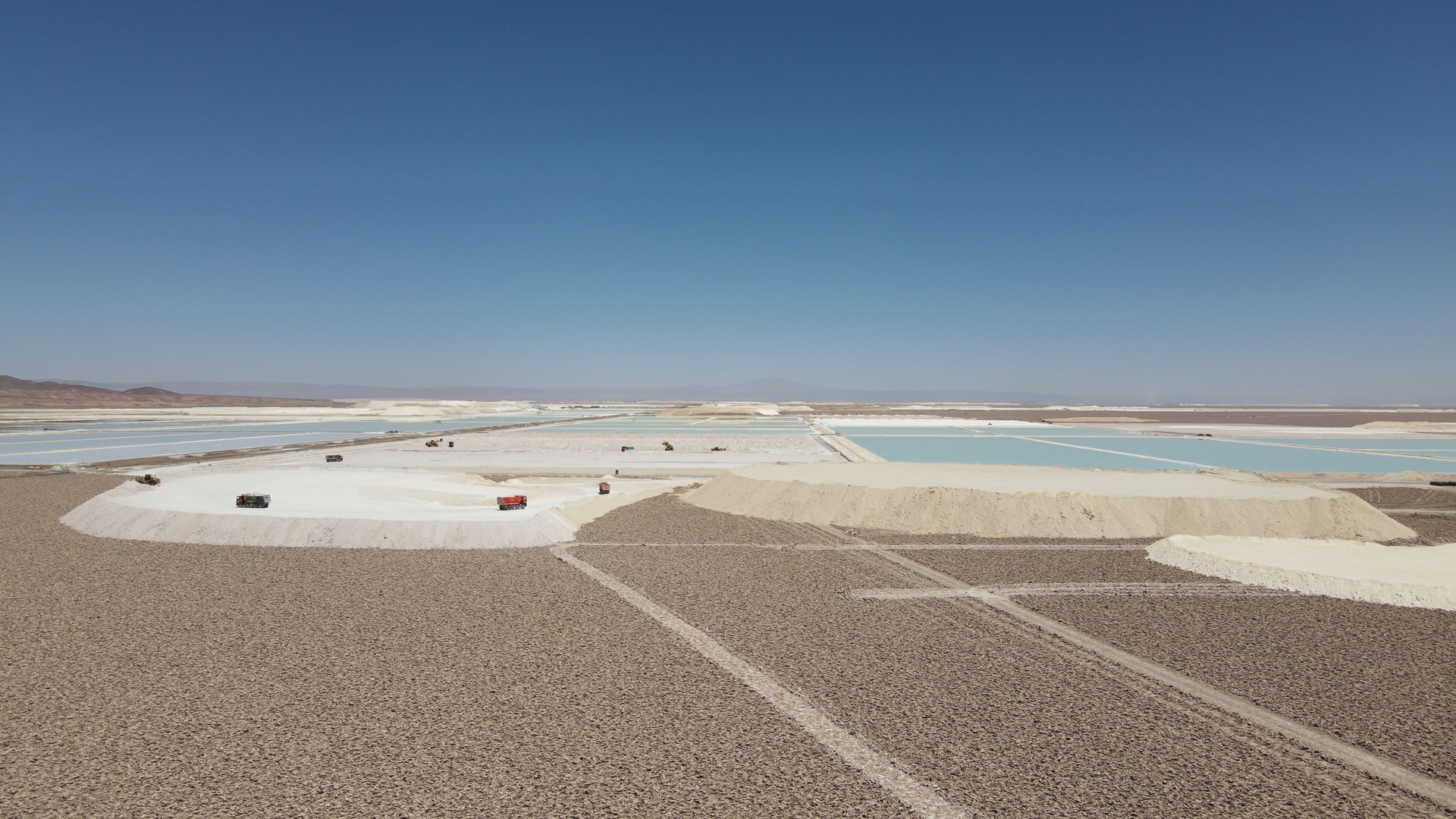
From September 28 to October 8, 2026, FARN participated in the European Alternative Raw Materials Week, organized by the AK Rohstoffe network. This space brings together representatives from academia, civil society, trade unions, and politics to debate the extraction, supply, and management of raw materials within a geopolitical context marked by disputes over minerals considered critical for the energy transition.
Pía Marchegiani, Deputy Director and Environmental Policy Director at FARN, participated in the Raw Materials Summit, a space where representatives from international politics, trade unions, and civil society discussed courses of action for a sustainable and globally just raw materials policy that prioritizes environmental protection and human rights.
Marchegiani delivered one of the central speeches at the event, highlighting the unique features of Latin America given its significant reserves of lithium, copper, and rare earths. As she stated, the region stands out in terms of biological and cultural diversity, but it is simultaneously the most unequal and dangerous region for those who defend nature.
“Given the current geopolitical dispute over these materials considered critical for the energy transition, Latin America is once again viewed as a territory to be exploited. Meanwhile, local right-wing governments align with U.S. policies and undertake deregulation processes with negative impacts on the environment and human rights,” she explained.
As part of an interdisciplinary panel alongside Matthias Koehler (German Federal Ministry for Economic Affairs and Climate Action), Benjamin-Immanuel Hoff (IG Metall), and Hannah Pilgrim (AK Rohstoffe), moderated by Kristin Langen, she emphasized the need to preserve ecosystems and respect territorial perspectives and the right to self-determination amidst the dispute over raw materials.
“The national government seeks to present Argentina as a desirable destination for foreign investment by granting extraordinary benefits, such as those contemplated under the RIGI. The reduction of state controls and resources for environmental protection, as well as the limitations imposed on democratic debate surrounding these projects, raise concern,” she added.
To learn more about the tensions surrounding the extraction of minerals considered critical for the energy transition in Argentina, Bolivia, and Chile, we invite you to consult the document Transition Minerals in Argentina: Investments First, Rights Later.